
In the digital age, where online attention spans are shrinking and competition is increasing every day, businesses must adopt smarter strategies to stay visible and relevant. Among the many digital marketing techniques available today, Social Media Optimization (SMO) has emerged as a powerful and cost-effective approach to build brand awareness, engage audiences, and support long-term growth.
Social media platforms are no longer just spaces for social interaction; they are influential marketing ecosystems. Customers discover brands, compare services, read reviews, and even make purchase decisions through social media. This makes Social Media Optimization a vital pillar of modern digital marketing.
This comprehensive guide explores SMO in detail—its meaning, importance, strategies, benefits, tools, best practices, trends, and future scope—helping businesses and marketers fully understand how to use it effectively.
What is Social Media Optimization (SMO)?
Social Media Optimization (SMO) is the process of strategically optimizing social media profiles, content, and engagement activities to improve a brand’s online presence and performance across social platforms. The main objective of SMO is to increase organic visibility, engagement, website traffic, and brand authority.
Unlike paid advertising, SMO focuses on long-term, sustainable growth by building meaningful relationships with the audience. It ensures that every aspect of a brand’s social presence—profiles, posts, captions, visuals, hashtags, and interactions—is aligned with its digital marketing goals.
SMO connects social media activity with broader strategies such as SEO, content marketing, and branding, making it an essential part of digital success.
Evolution of Social Media Optimization
Initially, social media was used mainly for networking and communication. Businesses posted content occasionally without any clear strategy. Over time, as platforms introduced algorithms, analytics, and business tools, optimization became necessary.
Today, SMO involves:
- Understanding platform algorithms
- Creating data-driven content
- Optimizing for engagement and reach
- Building communities instead of just followers
This evolution has transformed SMO into a structured and strategic digital marketing practice.
Importance of Social Media Optimization in Digital Marketing
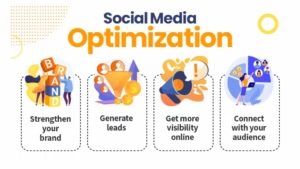
Social Media Optimization plays a critical role in digital marketing because it directly influences how brands are perceived online.
1. Expands Brand Reach
Optimized content reaches a larger and more relevant audience through shares, saves, and algorithmic recommendations.
2. Builds Brand Identity
Consistent visuals, tone, and messaging help create a recognizable and trustworthy brand identity.
3. Enhances Customer Engagement
SMO encourages two-way communication, making customers feel heard and valued.
4. Drives Quality Website Traffic
Users who visit a website through social media are often more engaged and interested.
5. Supports Other Digital Marketing Channels
SMO strengthens SEO, content marketing, influencer marketing, and email marketing efforts.
Key Elements of Social Media Optimization
A successful SMO strategy is built on multiple interconnected elements. Each element contributes to overall performance.
1. Social Media Profile Optimization
A well-optimized profile acts as a digital storefront. It should clearly communicate who you are, what you offer, and how users can connect with you.
Important aspects include:
- Clear and searchable username
- Professional profile photo and cover image
- Keyword-rich bio or description
- Website or landing page link
- Contact details and call-to-action buttons
Consistency across platforms improves credibility and trust.
2. Content Strategy in SMO
Content is the backbone of Social Media Optimization. The success of SMO depends largely on content quality, relevance, and consistency.
Effective SMO content should:
- Solve problems
- Educate or inform
- Entertain or inspire
- Encourage interaction
Common content formats include:
- Educational posts and tips
- Carousel posts
- Short-form videos (reels, shorts)
- Stories and live sessions
- Infographics
- Testimonials and case studies
- User-generated content
A balanced mix of content keeps the audience engaged without overwhelming them.
3. Visual Optimization
Visuals play a major role in SMO. Eye-catching images and videos stop users from scrolling and encourage engagement.
Best practices include:
- High-resolution images
- Platform-specific dimensions
- Consistent color themes
- Readable fonts and layouts
- Clear branding elements
Strong visuals improve content retention and shareability.
4. Hashtag and Keyword Optimization
Hashtags and keywords improve discoverability on social platforms.
Hashtag Optimization
- Use niche-specific hashtags
- Combine popular and low-competition hashtags
- Avoid irrelevant or spam hashtags
- Research trending hashtags in your industry
Keyword Optimization
Keywords should be used naturally in:
- Bios
- Captions
- Page descriptions
- Video titles
- Alt text (where available)
This helps content appear in platform searches and recommendations.
5. Audience Engagement and Community Building
Engagement is the heart of SMO. Social media platforms reward accounts that actively interact with their audience.
Effective engagement strategies include:
- Responding to comments and messages
- Liking and sharing audience posts
- Asking questions in captions
- Running polls and quizzes
- Hosting live sessions or discussions
Building a community increases loyalty, trust, and long-term growth.
Platform-Specific Social Media Optimization Strategies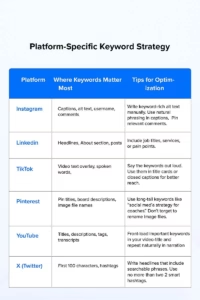
Each social media platform has unique features and user behavior. SMO strategies must be adapted accordingly.
Facebook Optimization
- Complete page information
- Post a mix of videos, images, and text
- Use stories and groups
- Encourage reviews and recommendations
Instagram Optimization
- Optimize bio and highlights
- Focus on reels and stories
- Maintain visual consistency
- Use strategic hashtags and captions
LinkedIn Optimization
- Optimize personal and company profiles
- Share professional and educational content
- Publish articles and insights
- Engage with comments and connections
X (Twitter) Optimization
- Use concise and engaging text
- Participate in trending conversations
- Use relevant hashtags
- Maintain posting frequency
YouTube Optimization
- Optimize titles and descriptions
- Use keywords and tags
- Create engaging thumbnails
- Maintain consistent posting
SMO vs SMM: Understanding the Difference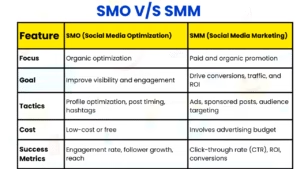
Many marketers confuse Social Media Optimization (SMO) with Social Media Marketing (SMM). While they are closely related, they serve different purposes.
| Aspect | SMO | SMM |
| Nature | Organic | Paid |
| Focus | Optimization & engagement | Advertising & promotions |
| Cost | Low | Higher |
| Results | Long-term | Short-term |
| Goal | Trust & authority | Quick traffic & sales |
An effective digital marketing strategy uses both SMO and SMM together.
Benefits of Social Media Optimization
Social Media Optimization offers numerous benefits for businesses of all sizes.
1. Increased Brand Awareness
Optimized content reaches wider audiences organically.
2. Better Engagement Rates
SMO encourages meaningful interactions instead of passive views.
3. Improved Online Reputation
Consistent engagement builds trust and credibility.
4. Cost-Effective Marketing
SMO reduces dependency on paid ads.
5. Higher Conversion Potential
Engaged followers are more likely to convert into customers.
Role of SMO in SEO and Content Marketing
Although social signals are not direct ranking factors, SMO supports SEO in several ways:
- Increases content reach and visibility
- Encourages backlinks and shares
- Drives consistent website traffic
- Improves brand search queries
SMO acts as a powerful distribution channel for content marketing.
Tools Used for Social Media Optimization
Various tools help streamline SMO efforts:
- Content scheduling tools
- Analytics and reporting platforms
- Hashtag research tools
- Graphic design tools
- Social listening tools
These tools improve consistency, efficiency, and performance tracking.
Common Mistakes in Social Media Optimization
Many businesses fail to achieve results due to common mistakes such as:
- Inconsistent posting
- Over-promotion without value
- Ignoring audience engagement
- Using irrelevant hashtags
- Not analyzing performance metrics
Avoiding these mistakes significantly improves SMO outcomes.
SMO Trends in 2025 and Beyond
The future of Social Media Optimization is shaped by changing user behavior and technology.
Short-Form Video Growth
Reels and short videos continue to dominate engagement.
AI-Driven Personalization
AI helps deliver personalized and relevant content.
Authentic Storytelling
Audiences prefer real, human-centered content.
Community-Focused Marketing
Brands that build communities outperform those that only broadcast messages.
Future Scope of Social Media Optimization
As social platforms evolve, SMO will become even more important. Businesses that invest in optimization, creativity, and audience engagement will gain a competitive advantage.
The future of SMO lies in:
- Personalization
- Community building
- Value-driven content
- Ethical and transparent communication
Measuring the Success of Social Media Optimization (SMO)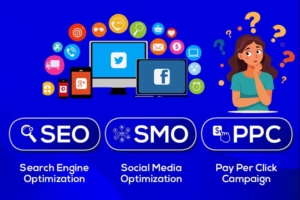
Implementing Social Media Optimization is only effective when its performance is properly measured. Tracking the right metrics helps businesses understand what is working, what needs improvement, and how social media efforts contribute to overall digital marketing goals. Measuring SMO success ensures data-driven decision-making rather than guesswork.
One of the most important SMO metrics is engagement rate. This includes likes, comments, shares, saves, and replies. High engagement indicates that the content resonates with the audience and aligns with platform algorithms. Engagement quality is often more valuable than follower count, as it reflects genuine audience interest.
Reach and impressions are also critical indicators. Reach shows how many unique users have seen the content, while impressions reflect how often it appears on screens. An increase in reach over time suggests effective optimization through hashtags, keywords, and content timing.
Another key factor is follower growth. While gaining followers should not be the only goal, consistent and organic growth signals strong brand positioning and content relevance. Sudden drops or stagnant growth may indicate the need for content or engagement adjustments.
Website traffic from social media is an essential metric for businesses. Tools like analytics dashboards help track how many users visit websites, blogs, or landing pages from social platforms. This shows how well SMO supports lead generation and conversions.
Additionally, audience insights such as age, location, interests, and activity times help refine content strategy. Understanding audience behavior allows brands to post at optimal times and create more personalized content.
By consistently analyzing these metrics, businesses can improve their Social Media Optimization strategy, maximize engagement, and achieve sustainable digital growth.
Conclusion
Social Media Optimization (SMO) is a vital component of modern digital marketing. It goes beyond posting content—it focuses on creating meaningful connections, building trust, and delivering consistent value to audiences. By optimizing profiles, content, visuals, hashtags, and engagement strategies, businesses can achieve sustainable growth without relying solely on paid advertising.
In an increasingly competitive digital landscape, SMO empowers brands to stay visible, relevant, and connected. Whether you are a business owner, freelancer, or digital marketer, mastering Social Media Optimization is essential for long-term success in digital marketing.
Author:Nisam