
Content Marketing: The Complete Guide to Building Trust, Authority, and Business Growth
In the modern digital landscape, businesses must go beyond traditional advertising to capture attention and build meaningful relationships with their audience. Consumers today are more informed, selective, and resistant to direct sales messages. They prefer brands that educate, entertain, and provide real value. This shift has made content marketing one of the most effective strategies for long-term success.
Content marketing is not just about writing blog posts or posting on social media. It is a strategic approach that focuses on delivering the right content to the right audience at the right time. When done correctly, it can transform your brand into a trusted authority, generate consistent traffic, and drive sustainable growth.
What is Content Marketing?

Content marketing is a planned marketing strategy that focuses on creating and sharing useful, relevant, and consistent content to attract and engage a specific target audience. The main aim is to build trust and encourage customers to take profitable actions over time.
Unlike traditional marketing, which directly promotes products or services, content marketing focuses on providing useful information that helps solve problems or answer questions. This builds trust over time and naturally leads to conversions.
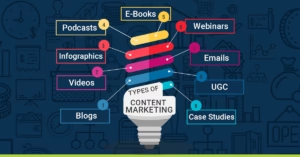
Content marketing includes various formats such as:
- Blog articles
- Videos
- Infographics
- Podcasts
- Social media posts
- Case studies
- E-books
- Email newsletters
Each type of content serves a different purpose and targets audiences at different stages of the buying journey.
Why Content Marketing Matters in Today’s Digital World
The importance of content marketing has grown significantly due to changes in consumer behavior and advancements in technology.
1. Builds Trust and Credibility
Strong business relationships are built on trust, making it a key factor in long-term success.By consistently sharing helpful and accurate information, you position your brand as an expert in your field. When customers trust you, they are more likely to choose your products or services.
2. Enhances Search Engine Visibility
Search engines prioritize high-quality, relevant content. By optimizing your content with the right keywords, you can improve your website’s ranking and attract organic traffic.
3. Generates High-Quality Leads
Content marketing attracts users who are genuinely interested in your offerings. These users are more likely to convert into customers compared to those reached through traditional ads.
4. Cost-Effective Strategy
Compared to paid advertising, content marketing requires lower investment and delivers long-term results. A single blog post can continue to generate traffic and leads for months or even years.
5. Supports the Entire Customer Journey
Content marketing helps guide potential customers from awareness to purchase. It provides the information they need at every stage, making decision-making easier.
Types of Content Marketing
To build an effective strategy, it is essential to understand the different types of content available.
1. Blogging
Blogging is the backbone of content marketing. It helps improve SEO, drive traffic, and establish authority. Regularly updated blogs keep your website fresh and relevant.
2. Video Marketing
Video content is one of the most engaging forms of content. It can explain complex topics quickly and capture attention effectively. Platforms like YouTube, Instagram, and TikTok have made video marketing essential.
3. Social Media Content
Social media platforms allow brands to connect directly with their audience. Content such as posts, reels, and stories increases engagement and brand visibility.
4. Email Marketing
Email marketing continues to be one of the most effective ways to nurture potential customers. Sending personalized emails helps build strong relationships, keep your audience engaged, and increase the chances of repeat purchases.
5. Infographics
Infographics present data in a visually appealing and easy-to-understand format. They are highly shareable and effective for simplifying complex information.
6. Podcasts
Podcasts are growing in popularity and provide a unique way to engage audiences through storytelling and discussions.
7. E-books and Whitepapers
These are in-depth resources that provide detailed information on specific topics. They are often used to generate leads by offering them in exchange for contact information.
Building a Content Marketing Strategy
A successful content marketing campaign requires a well-defined strategy.
1. Set Clear Goals
Start by identifying your objectives. These may include:
- Increasing website traffic
- Generating leads
- Boosting brand awareness
- Improving customer engagement
2. Understand Your Audience
Develop clear and detailed profiles of your ideal customers to better understand and represent your target audience.Understand their needs, preferences, and challenges.
3. Conduct Keyword Research
Find and use the keywords your target audience is actively searching for.Use tools like Google Keyword Planner to find high-performing keywords.
4. Create High-Quality Content
Focus on producing content that is:
- Informative
- Engaging
- Original
- Easy to read
High-quality content has a better chance of being shared widely and performing well in search engine rankings.
5. Develop a Content Calendar
Consistency is key in content marketing. Plan your content in advance and publish regularly.
6. Promote Your Content
Distribution is just as important as creation. Share your content across multiple channels, including social media, email, and online communities.
7. Analyze and Optimize
Track your performance using metrics such as:
- Traffic
- Engagement
- Conversion rates
Use this data to improve your strategy over time.
Content Marketing Funnel
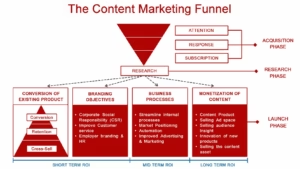
Understanding the content marketing funnel helps you create targeted content for each stage of the customer journey.
1. Awareness Stage
At this stage, users are looking for information. Provide educational content like blog posts, videos, and social media content.
2. Consideration Stage
Users are evaluating options. Offer detailed guides, case studies, and comparison articles.
3. Decision Stage
Users are ready to make a purchase. Provide testimonials, product demos, and reviews.
Benefits of Content Marketing
Content marketing offers numerous long-term benefits:
- Increased brand awareness
- Higher search engine rankings
- Improved customer relationships
- Better conversion rates
- Long-lasting results
- Stronger brand authority
Common Content Marketing Mistakes
Even experienced marketers can make mistakes. Avoid these common pitfalls:
1. Lack of Planning
Without a clear strategy, your efforts may not produce desired results.
2. Ignoring SEO
Content that is not optimized may fail to reach the intended audience.
3. Inconsistent Publishing
Irregular posting can reduce audience engagement.
4. Low-Quality Content
Poorly written or irrelevant content can damage your brand reputation.
5. Not Measuring Results
Failing to analyze performance prevents improvement.
Tips for Effective Content Marketing
Here are some practical tips to improve your content marketing:
- Focus on storytelling to make content engaging
- Use visuals to enhance readability
- Write clear and compelling headlines
- Keep your content simple and informative
- Update old content regularly
- Engage with your audience through comments and feedback
Role of SEO in Content Marketing
SEO (Search Engine Optimization) plays a crucial role in content marketing. Without effective SEO, even high-quality content can fail to reach its intended audience. Key SEO practices include:
- Using relevant keywords
- Optimizing meta titles and descriptions
- Creating high-quality backlinks
- Improving website speed and mobile-friendliness
SEO helps deliver your content to the right audience at the right moment.
Measuring Content Marketing Success
To evaluate the effectiveness of your content marketing efforts, track key performance indicators (KPIs):
- Website traffic
- Time spent on page
- Bounce rate
- Social shares
- Lead generation
- Conversion rate
These metrics help you understand what works and what needs improvement.
Future Trends in Content Marketing
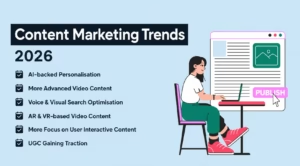
Content marketing continues to evolve. Here are some trends shaping its future:
1. Artificial Intelligence (AI)
AI tools are helping marketers create content faster and more efficiently.
2. Voice Search Optimization
As voice assistants become more popular, it’s increasingly important to optimize content for voice-based searches.
3. Interactive Content
Quizzes, polls, and interactive videos increase user engagement.
4. Personalization
Tailoring content to individual users improves user experience and conversion rates.
5. Short-Form Video Content
Platforms like Instagram Reels and TikTok are driving the popularity of short-form videos.
The Importance of Consistency in Content Marketing

Consistency is one of the most important factors in successful content marketing. Publishing high-quality content regularly helps build audience trust and keeps your brand top-of-mind. When users see that you consistently provide valuable insights, they are more likely to return to your platform and engage with your content.
A well-planned content calendar ensures that your publishing schedule remains organized and aligned with your goals. Whether it’s weekly blog posts, daily social media updates, or monthly newsletters, maintaining consistency strengthens your brand identity and improves long-term results. Over time, consistent efforts compound, leading to increased visibility, stronger relationships, and sustainable business growth.
Content Marketing in Local and Regional Markets
While global content strategies are important, businesses should not overlook the power of local and regional content marketing. Creating content tailored to a specific geographic audience can significantly improve engagement and conversions. For example, using local language, cultural references, and region-specific topics makes your content more relatable and trustworthy.
In regions like Kerala, businesses that produce content in Malayalam often connect better with their audience compared to English-only content. Localized blog posts, social media content, and video marketing can help brands build a stronger emotional connection with users.
Additionally, focusing on local SEO strategies—such as optimizing for “near me” searches and listing businesses on Google Business profiles—can drive highly targeted traffic. Customers searching for services nearby are more likely to convert, making local content marketing a highly effective approach.
Collaborating with local influencers, sharing community stories, and highlighting customer experiences can further enhance brand visibility. By combining global strategies with local insights, businesses can create a more impactful and well-rounded content marketing approach.
Conclusion
Content marketing is no longer optional—it is a necessity for businesses that want to succeed in the digital age. By focusing on delivering value rather than direct promotion, brands can build trust, attract the right audience, and achieve sustainable growth.
A well-planned content marketing strategy allows you to connect with your audience, stand out from competitors, and create a strong online presence. Whether you are a beginner or an experienced marketer, investing in content marketing will provide long-term benefits for your business.
Author:Nisam